
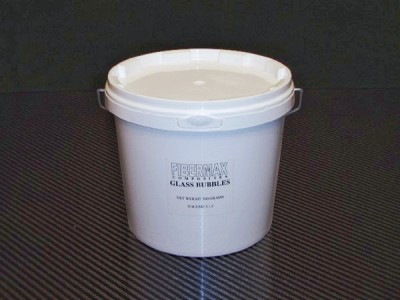
35.08 EUR / container of 10.0 lt
Net weight 0.66 kg
Chemically composed of glass, their hollow form helps reduce matrix density. Their spherical shape prevents stress concentration and, as a consequence, increases cracking resistance of putties. In comparison to microballoons, they are physically harder, more waterproof and somewhat more difficult to sand. They have a fractional survival rate of 80% or more, for continuous use at 250 psi in highly filled resin systems. As a result, glass bubbles are also used as an additive for a number of buoyancy applications, in depths of up to 600 m in seawater. Suggested quantity to add in putties depends upon application.
Particle density 200g/lt
Bulk density 125 g/lt
Conversion data: 1 lt = 0.91 qt = 20 fl oz
Intrastat Number for this product: 70182000..
35.08€
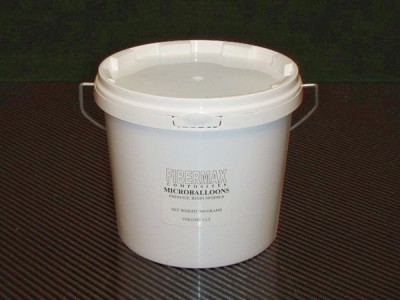
79.68 EUR / 10 lt container
Net weight 1.20 kg
Hollow phenolic resin spheres have a distinctive reddish/brown color. This makes them particularly useful for cosmetic joints in wood construction. Although not as waterproof as glass bubbles, microballoons have excellent sanding characteristics. Suggested quantity to add in putties depends upon application. Not compatible with polyester and vinylester resins. Store in tightly closed containers.
Particle density: 250g/lt
Bulk density: 100g/lt
Conversion data: 1 lt = 0.91 qt = 20 fl oz
Intrastat Number for this product: 39094000..
79.68€
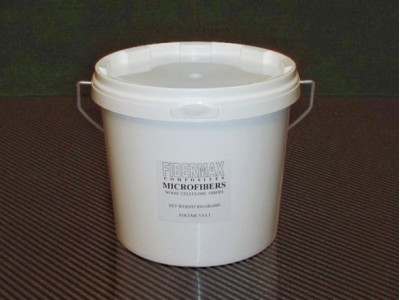
27.45 EUR / container of 10.0 lt
Net weight: 2.50 kg
Very fine wood cellulose fibers, used to reinforce the matrix and create structural adhesives for various applications. Microfibers absorb and hold great amounts of resin. Very hard wearing, hard to sand, very good for bonding wood. Where a strong bond is required microfibers should be preferred. Suggested quantity to add in putties depends upon application.
Conversion data: 1 lt = 0.91 qt = 20 fl oz
Intrastat Number for this product: 68062090..
27.45€
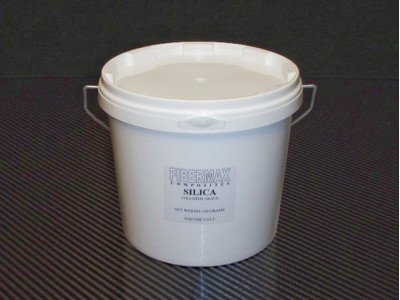
19.96 EUR / 10 lt container
Net weight 0.60 kg
Silica is a viscosity regulator, used to control sag characteristics of resin matrix or matrix-filler mixes. Very hard to sand (it is derived from quartz,) is not to be used in large quantities if sanding is anticipated. Very good to create structural adhesives, and useful in applications where a hard wearing surface or scratch resistance is needed (like molds). Suggested quantity to add in putties depends upon application.
Bulk weight 50 g/lt
Conversion data: 1 lt = 0.91 qt = 20 fl oz
Intrastat Number for this product: 28112200..
19.96€
Showing 1 to 4 of 4 (1 Pages)